
Commercial Smart Building Automation: Installation Costs and Energy Savings
As Commercial Smart Building Automation: Installation Costs and Energy Savings takes center stage, this opening passage beckons readers into a world crafted with good knowledge, ensuring a reading experience that is both absorbing and distinctly original.
Delve into the intricacies of installation costs and energy savings in commercial smart building automation, exploring the factors that drive efficiency and cost-effectiveness in modern building systems.

When it comes to commercial smart building automation, installation costs are a significant consideration for building owners and operators. Understanding the components that contribute to these costs, comparing different types of smart building automation systems, and exploring factors that can impact installation costs are essential for making informed decisions.
Let’s delve into the details.
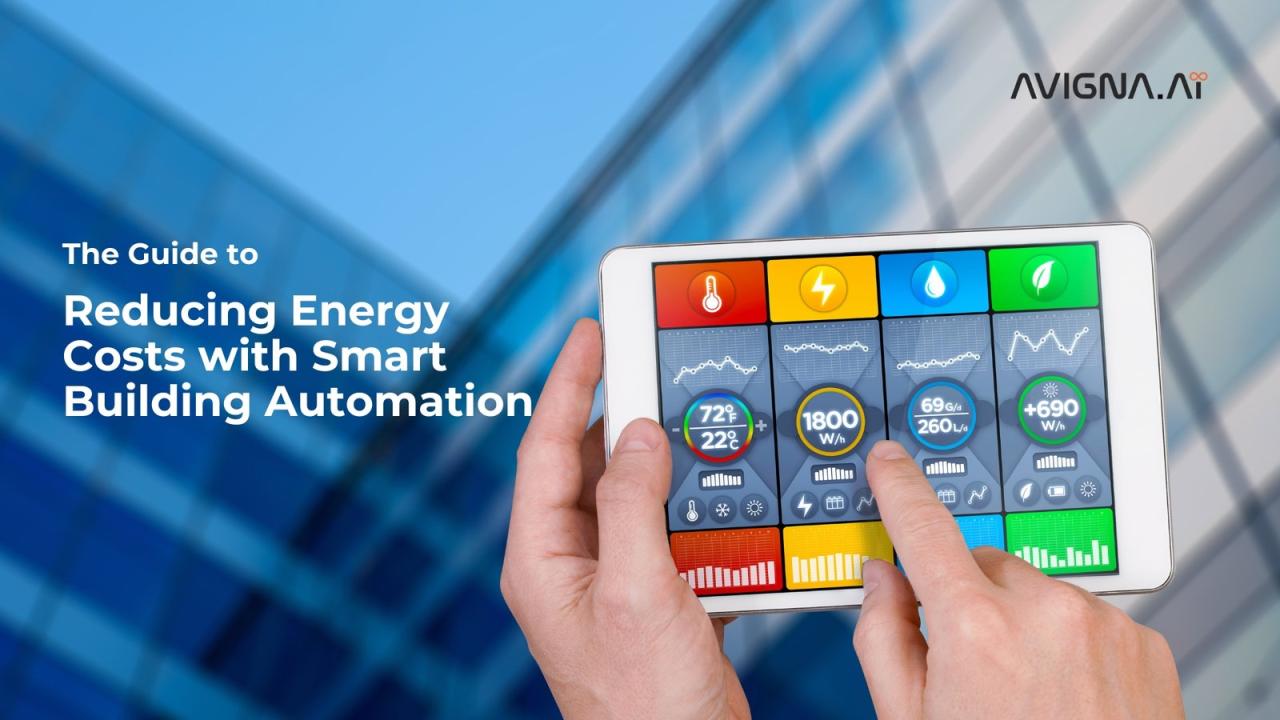
Commercial smart building automation systems play a crucial role in achieving significant energy savings through the optimization of energy consumption. By utilizing advanced technologies and features, these systems can efficiently manage lighting, heating, cooling, and other building systems, resulting in reduced energy usage and lower utility costs.
One of the key features of smart building automation systems is the integration of sensors and smart controls that monitor and adjust energy usage based on occupancy levels, time of day, and environmental conditions. By automatically adjusting settings and schedules, these systems ensure that energy is only used when needed, leading to substantial savings in electricity and heating/cooling costs.
When compared to traditional building systems, smart building automation offers a significant advantage in terms of energy savings. Traditional systems often operate on fixed schedules or manual adjustments, which can result in unnecessary energy consumption. In contrast, smart building automation systems continuously analyze data and adjust settings in real-time, maximizing energy efficiency and reducing waste.
Numerous real-life examples demonstrate the substantial energy savings achieved through the implementation of smart building automation. For instance, a commercial office building in downtown Chicago reduced its energy consumption by 30% after installing a comprehensive smart building automation system. By optimizing lighting, HVAC, and other systems, the building was able to achieve significant cost savings and improve overall energy efficiency.
What are some key components that contribute to installation costs in commercial smart building automation?
Key components include hardware costs, labor expenses, integration complexities, and customization requirements.
How do commercial smart building automation systems optimize energy consumption?
These systems utilize sensors, AI algorithms, and real-time data analysis to adjust lighting, HVAC, and other systems for maximum energy efficiency.
Can traditional building systems achieve the same level of energy savings as smart building automation?
Traditional systems lack the automation and intelligence to optimize energy consumption to the same extent as smart building automation, resulting in lower energy savings.